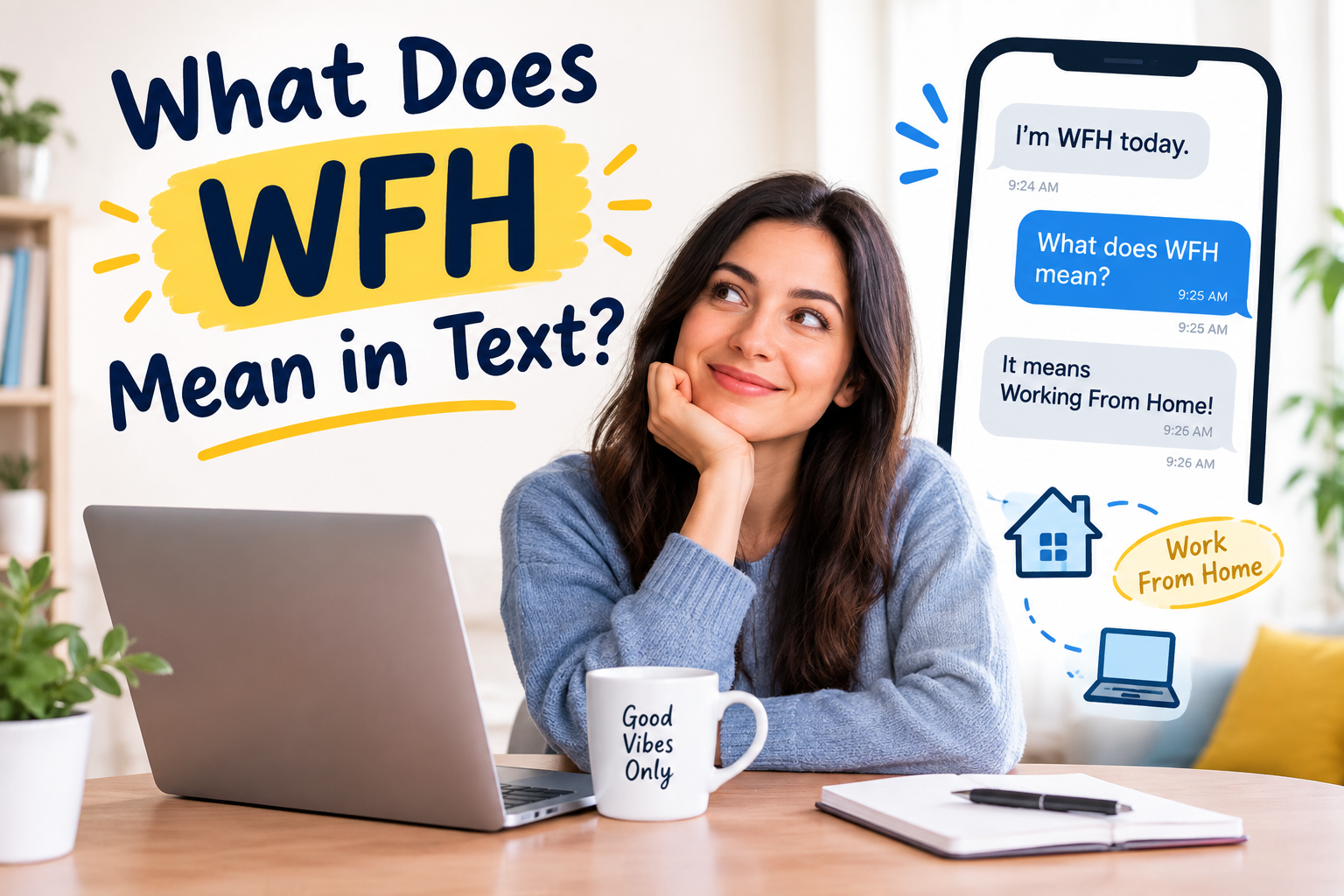
Have you ever opened a message and seen someone write, “I am WFH today,” and wondered what they meant? You are definitely not the only one. What Does WFH Mean in Text? It is a common question because people use short workplace terms everywhere now, from text messages and group chats to emails and social media.
WFH simply means Working From Home. It tells someone that a person is doing their job from home instead of going into the office. You may see it when a coworker explains why they cannot meet in person or when someone gives a quick update about their workday. Understanding the WFH meaning is pretty simple once you know what the letters represent. In this guide, we will look at how people use WFH, what it means in different conversations, and how it compares with remote work.
What Does WFH Mean in Text?
WFH means Working From Home.
When somebody writes WFH in a message, they usually mean they are working from their home rather than working from a traditional office.
For example:
“I am WFH today, but I will join the meeting at 10.”
The person is still working. They are simply doing their job from home.
The WFH meaning in text does not usually change depending on who sends the message. A coworker, manager, friend, or family member can use it when talking about someone working from home.
| Term | Meaning | Common use |
|---|---|---|
| WFH | Working From Home | Work messages and casual chats |
| WFO | Working From Office | Talking about office based work |
| OOO | Out Of Office | Showing someone is unavailable |
| PTO | Paid Time Off | Vacation or approved leave |
| Remote work | Working away from a regular office | Work arrangement |
So, when you see WFH, think of it as a quick way to say, “I am working from home.”
What Does WFH Stand For?
If you are wondering what does WFH stand for, the answer is Working From Home.
It is one of those workplace abbreviations that became very common as more people started working outside traditional offices.
You might see messages like:
“WFH today.”
“I will be WFH tomorrow.”
“Are you WFH or coming into the office?”
These messages are short, but the meaning is easy to understand once you know the abbreviation.
The phrase can appear in professional conversations as well as everyday messages. Someone may use it in a team chat, email, calendar note, or personal text.
WFH Meaning in Text Messages
The WFH meaning in text messages is usually very straightforward. Someone is telling another person that they are working from home.
Here are a few natural examples.
| Message | What it means |
|---|---|
| “I am WFH today.” | I am working from home today. |
| “WFH tomorrow.” | I will work from home tomorrow. |
| “Still WFH.” | I am still working from home. |
| “Are you WFH today?” | Are you working from home today? |
| “WFH until Friday.” | I will work from home until Friday. |
People like using WFH because it saves time. Instead of typing the full phrase every time, three letters communicate the idea quickly.
That makes it especially useful when people are sending short workplace updates.
WFH Meaning in Chat

The WFH meaning in chat stays the same as it does in a text message.
You might see WFH in platforms such as Slack, Microsoft Teams, Google Chat, or another workplace messaging system.
Imagine your coworker sends:
“I am WFH today. Message me if you need anything.”
There is no hidden meaning here. They are simply letting the team know they are working from home and remain available.
Another example could be:
“Who is WFH tomorrow?”
A coworker is asking which people will be working from home the next day.
In fast moving workplace chats, short terms like WFH make conversations easier to follow.
How People Use WFH in Everyday Conversations
WFH is not limited to formal workplace communication.
People also use it when talking with friends and family.
For example:
“Can we grab lunch later? I am WFH today.”
Or:
“I cannot come out right now. I am WFH.”
In both cases, the person is explaining that they are working from home.
The meaning remains the same, but the tone can change depending on the conversation.
| Situation | Example |
|---|---|
| Coworker | “I am WFH today.” |
| Manager | “Several team members are WFH.” |
| Friend | “I am WFH, so maybe later.” |
| Family | “I am WFH today, please call first.” |
| Group chat | “Who is WFH tomorrow?” |
This is one reason WFH has become such a familiar abbreviation.
Why Do People Use WFH?
People usually use WFH because it is short and easy.
Think about the difference:
Working From Home
compared with:
WFH
When someone is sending a quick message, the shorter version feels more natural.
There are several reasons people use it:
| Reason | Why it helps |
|---|---|
| Saves time | Three letters are quicker to type |
| Easy to recognize | Common among workplace users |
| Fits short messages | Works well in chats |
| Useful for updates | Quickly explains work location |
| Informal | Sounds natural in everyday communication |
The Working From Home abbreviation also fits neatly into calendars, status messages, team chats, and short emails.
Is WFH Professional?
Yes, WFH can be professional.
It is widely understood in many workplace environments, especially when people communicate internally.
For example:
“I am WFH today but available by phone.”
That sounds perfectly normal in a team message.
However, context matters.
If you are writing a legal document, a formal business report, or communicating with someone who may not know workplace abbreviations, writing Working From Home may be clearer.
| Situation | WFH suitable? |
|---|---|
| Team chat | Yes |
| Internal email | Yes |
| Workplace status | Yes |
| Casual text | Yes |
| Social media | Yes |
| Formal legal document | Better to use full phrase |
| Formal report for unfamiliar readers | Full phrase may be clearer |
The goal is not to avoid WFH. It is simply to use the wording that makes sense for your audience.
WFH vs Remote Work

People sometimes treat WFH and remote work as exactly the same thing. They are closely related, but there is a small difference.
WFH specifically refers to working from home.
Remote work is a broader term.
Someone doing remote work might work from home, a coworking space, a library, a hotel, or another location away from the company office.
| WFH | Remote work |
|---|---|
| Specifically means working from home | Can happen from many locations |
| Usually refers to the home | Can include home and other locations |
| Common workplace abbreviation | Broader work arrangement |
| Often used in quick messages | Often used in company policies and job descriptions |
So when comparing WFH vs remote work, remember that WFH can be one form of remote work.
WFH Does Not Mean a Day Off
This is one of the easiest things to misunderstand.
If somebody says:
“I am WFH today.”
They are not saying they have the day off.
They are saying they are working from home.
They may still have meetings, answer emails, make calls, complete projects, and communicate with coworkers.
| WFH means | WFH does not mean |
|---|---|
| Working from home | Taking vacation |
| Doing regular work | Being off work |
| Working remotely from home | Ignoring messages |
| Staying home while working | Having a free day |
This distinction matters because someone may be at home while still having a full working schedule.
WFH and Hybrid Work
You may also see WFH mentioned when people talk about hybrid work.
Hybrid work usually means a person divides their working time between home and an office.
For example, someone might work from home on Monday and Friday and go into the office during the other weekdays.
| Work style | Simple meaning |
|---|---|
| WFH | Working from home |
| Office based | Working mainly at the company office |
| Remote | Working away from the regular office |
| Hybrid | Combining home and office work |
A person can therefore have a hybrid job and still say, “I am WFH today.”
Common WFH Examples
Sometimes the easiest way to understand an abbreviation is to see how people actually use it.
Here are some natural examples:
“I am WFH today because my internet technician is coming.”
“Are you WFH tomorrow?”
“I will be WFH until Friday.”
“Half our team is WFH today.”
“I am WFH but available on Teams.”
“Can we move the meeting? I am WFH and have another call at that time.”
These examples show why the abbreviation works so well in everyday communication.
WFH Workplace Abbreviation and Similar Terms
WFH is only one of many workplace abbreviations people use.
Once you know WFH, you may also come across terms such as WFO, OOO, ETA, EOD, ASAP, and FYI.
| Abbreviation | Full meaning | General use |
|---|---|---|
| WFH | Working From Home | Work location |
| WFO | Working From Office | Office location |
| OOO | Out Of Office | Availability |
| ETA | Estimated Time of Arrival | Timing |
| EOD | End Of Day | Work deadline |
| ASAP | As Soon As Possible | Urgency |
| FYI | For Your Information | Sharing information |
| BRB | Be Right Back | Temporary absence |
These terms can make workplace communication much shorter.
When Should You Use WFH?
You can use WFH when the people reading your message understand the abbreviation.
It works especially well when you are:
- Updating your team
- Messaging a coworker
- Telling your manager where you are working
- Adding a work status
- Explaining why you cannot meet in person
- Talking casually with friends
A simple message such as “WFH today” can be enough when everyone already understands the context.
If you are unsure whether someone knows the abbreviation, use the complete phrase the first time.
For example:
“I am working from home today, so I will join the meeting online.”
After that, WFH may be perfectly clear.
Is WFH Used in the USA and UK?
Yes, the abbreviation is understandable in both American and British workplace communication.
The basic meaning does not change.
| Region | Meaning |
|---|---|
| USA | Working From Home |
| UK | Working From Home |
You may see WFH in workplace chats, emails, job discussions, social media posts, and casual conversations in both markets.
The exact workplace culture can vary from one company to another, but the abbreviation itself is simple.
A Quick Look at the WFH Meaning
If you want the answer without all the extra details, here it is:
| Question | Answer |
|---|---|
| What does WFH mean? | Working From Home |
| What does WFH stand for? | Working From Home |
| Is WFH used in text? | Yes |
| Is WFH used in chat? | Yes |
| Is WFH professional? | Yes, depending on context |
| Does WFH mean a day off? | No |
| Is WFH the same as remote work? | Not exactly |
| Can WFH be part of hybrid work? | Yes |
That is really the whole idea.
Final Thoughts
So, What Does WFH Mean in Text? It means Working From Home. It is a simple workplace abbreviation that lets someone quickly explain they are doing their job from home rather than going into the office.
You may see WFH in a text message, workplace chat, email, social media post, or quick status update. The WFH meaning stays the same in most situations.
Once you know it, messages such as “I am WFH today” are easy to understand. And if you are exploring online terms, workplace slang, or even something like Biblez Meaning, the same idea applies: context often makes unfamiliar words much easier to understand.
WFH is short, practical, and now a familiar part of everyday workplace communication.
Frequently Asked Questions
1. What does WFH mean in text?
WFH means Working From Home. When someone writes WFH in a text, they are usually saying they are working from home instead of going to their regular workplace.
2. What does WFH stand for?
WFH stands for Working From Home. It is a common workplace abbreviation used in messages, emails, chats, and status updates.
3. Is WFH the same as remote work?
Not exactly. WFH specifically means working from home, while remote work can include working from other locations away from the company office.
4. Can I use WFH in a professional message?
Yes. WFH is commonly used in workplace chats, internal emails, team updates, and similar communication. For very formal documents, writing Working From Home may be clearer.
5. Does WFH mean I am off work?
No. WFH means you are still working, but you are doing your job from home. You may still attend meetings, answer emails, take calls, and complete your normal responsibilities.
