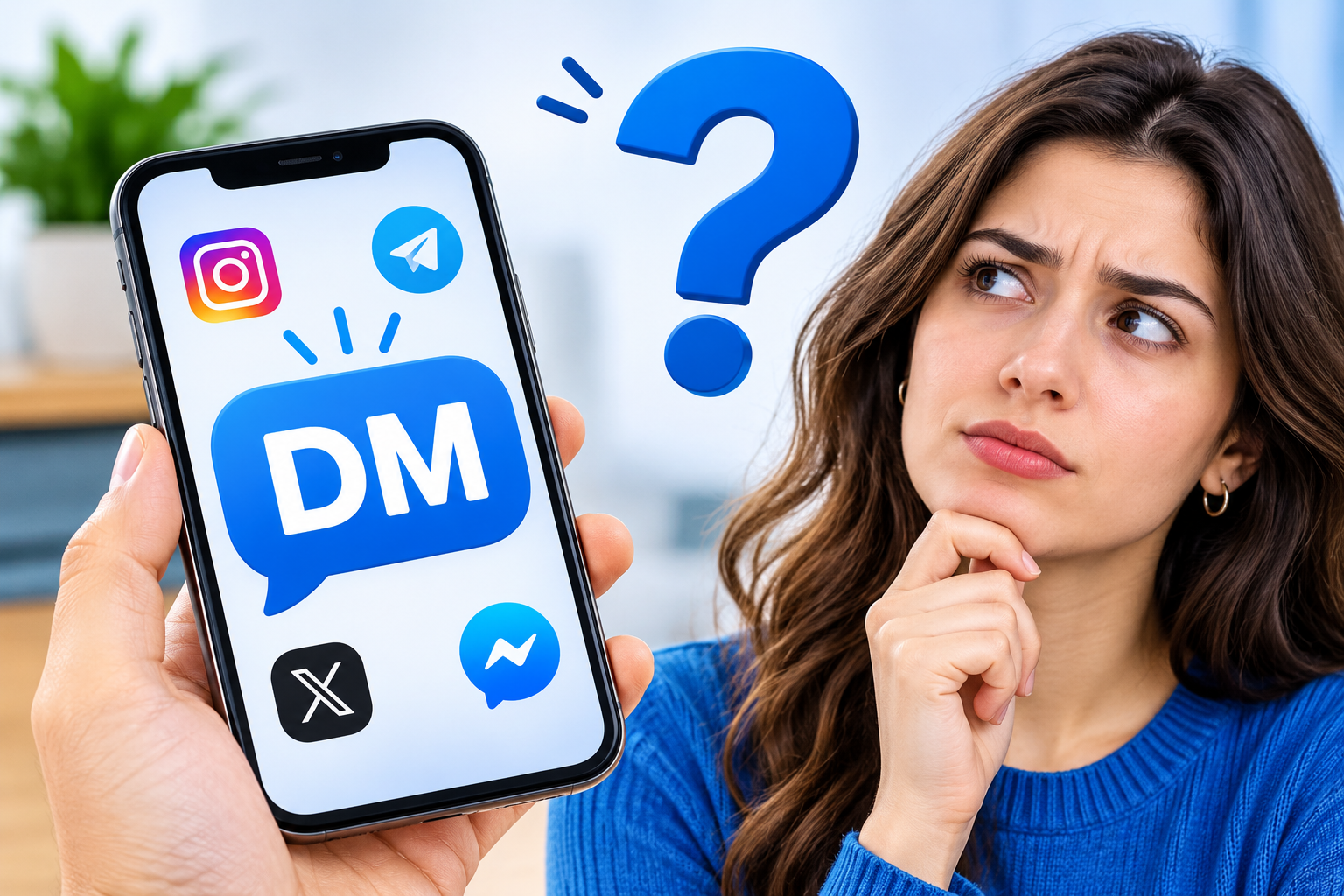
The meaning of DM is simple: DM stands for direct message. It is a private message you send to one person (or a small group) on a social media app, instead of posting something for everyone to see.
You will see “DM” everywhere online, from Instagram bios to business pages to friendly comments like “DM me the details.” This guide explains the meaning of DM, where people use it, how to send one, and when it is smart to keep a conversation out of the public eye.
What Does “DM” Mean?
DM means direct message. It is a private, one-to-one message sent through a social media platform or messaging app. Only the people in that conversation can read it.
The word “direct” is the key part. Your message goes straight to a specific person, not to your followers, your feed, or a public comment section.
Featured Snippet Definition
DM = Direct Message. A DM is a private message sent from one user to another on a social media platform such as Instagram, X, Facebook, TikTok, Snapchat, Discord, or LinkedIn. It is not visible to the public.
Simple Meaning of DM
In the simplest terms, the meaning of DM is a private chat inside an app. Think of a public post as speaking on a stage. A DM is leaning over and talking quietly to one person.
A DM can include text, photos, videos, voice notes, GIFs, links, and emojis. The exact features depend on the app you use.
People also use “DM” as a verb. “I will DM you later” means “I will send you a private message later.”
Where Is DM Used?
Almost every major social platform has a DM feature. The name can change slightly (some apps call it “Chat” or “Messages”), but the idea stays the same. Here is how the meaning of DM plays out on each one.
On Instagram, a DM is a private message you send through the paper plane icon. You can chat one-to-one, start a group chat, reply to Stories, or share posts and Reels directly. It is one of the most common places people use the term.
On Facebook, DMs happen through Messenger. You can message friends, Pages, and sometimes people you are not connected to (these may land in a message requests folder). Businesses often use it to answer customer questions.
X (Formerly Twitter)
On X, a DM is a private message that stays out of your public timeline. Depending on privacy settings, some users accept DMs only from people they follow, while others allow messages from anyone. Messages from unknown accounts may show up as requests.
TikTok
On TikTok, DMs let you message other users privately and share videos with friends. TikTok limits direct messaging for younger users, so access depends on age and account settings.
Snapchat
Snapchat calls its private messaging feature Chat, but people still call it a DM in everyday speech. You can send text, Snaps, and voice or video calls. Many messages disappear after being viewed or after a set time, depending on chat settings.
Discord
On Discord, a DM is a private conversation outside of any server channel. It works for one person or a small group. Gamers, creators, and online communities use it to talk away from the main chat.
On LinkedIn, a DM is a private message sent through the Messaging tab. Professionals use it for networking, job inquiries, and business introductions. Premium users can also send InMail to people outside their network.
What is the meaning of DM in social media
In social media, the meaning of DM is a private message sent between users, hidden from the public feed. It lets people talk one-to-one without posting on a profile, comment section, or timeline.
Brands, creators, and everyday users all rely on DMs for fast, personal communication.
Why Do People Use DMs?

People use DMs because they are quick, personal, and private. Here are the main reasons behind the meaning of DM in real life.
Privacy
Some topics do not belong in a public comment. A DM keeps the conversation between you and the other person, so you can talk without an audience.
Sharing Personal Information
When someone needs to share an order number, email address, or booking detail, a DM is the safer choice than a public post. That said, you should still avoid sending passwords, bank details, or ID numbers through any chat.
Business Communication
Businesses use DMs to answer questions, share quotes, confirm orders, and follow up with leads. It feels more personal than a mass email and often gets a faster reply.
Customer Support
Many brands tell customers to “send us a DM” when there is a problem. This keeps account details private and moves a complaint away from the public timeline.
Building Relationships
DMs help people connect on a deeper level. Friends chat, creators talk with fans, and professionals build real relationships that start with a simple message.
Meaning of dm in chat
In chat, the meaning of DM is a private, direct conversation with another person. It is different from a group chat or a public thread because only the chosen people can see it.
Real-Life Examples of DM
Seeing the meaning of DM in real sentences makes it much easier to understand. Here are four common situations.
Example 1
A small bakery posts a cake on Instagram. A follower comments, “How much is this?” The bakery replies, “Please DM us your date and size, and we will send a quote.”
Here, DM means a private message with order details.
Example 2
Two friends are talking about weekend plans in a public comment section. One says, “Let me DM you the address.” The address is now shared privately, not on a public post.
Example 3
A customer complains about a late delivery on X. The brand replies, “We are sorry about that. Please DM us your order number.” This keeps personal order information out of the public timeline.
Example 4
A designer wants to work with a brand on LinkedIn. She writes a short, polite DM introducing herself and linking her portfolio. That one message can open the door to a new client.
Meaning of “DM Me”
“DM me” means “send me a direct message.” It is an invitation or request for someone to contact you privately.
You will often see it in comments, bios, and captions. For example, “DM me for rates” or “DM me if you want the link.”
Quick tip: If someone says “DM me” and you are not sure about their account, check that the profile is real before sending any personal details.
Meaning of “Slide Into My DMs”
“Slide into my DMs” means to send someone a private message, usually to start a casual or friendly conversation. It is often linked to flirting or reaching out to someone you do not know well.
The phrase is playful and informal. Some people use it as a joke, while others use it seriously.
Tone matters here. A polite, respectful message is welcome. A pushy or repeated message is not.
DM vs Similar Messaging Terms
The meaning of DM overlaps with a few other terms, which can cause confusion. This table shows how they differ.
| Term | Full Form | Meaning | Where It Is Common |
|---|---|---|---|
| DM | Direct Message | Private message sent to one person or a small group on a social platform | Instagram, X, TikTok, Discord, LinkedIn |
| PM | Private Message | Older term for a private message, common on forums and message boards | Forums, Reddit, gaming sites |
| Chat | Instant Chat | A live message thread, which can be private or public | Snapchat, Facebook Messenger |
| Text | Text Message (SMS) | A message sent through your phone number, not a social app | Phones and SMS apps |
| Group Chat | Group Conversation | A shared chat with three or more people | WhatsApp, Instagram, Discord |
In short, a DM happens inside a social app, while a text uses your phone carrier. A PM is basically the same idea as a DM, just with older roots.
How to Send a DM
To send a DM, open the app, find the person’s profile or the messages inbox, tap the message icon, and type your message. The steps are almost the same everywhere.
- Open the app and log in to your account.
- Find the person by visiting their profile or searching their name.
- Tap the message button. On Instagram it is a paper plane icon. On X it is an envelope. On Facebook it is Messenger.
- Type your message and add any photo, link, or emoji you want.
- Tap send. The person will get a notification.
Good to know: If you do not follow the person, your DM may go to a message requests folder. They may not see it right away.
When Should You Use a DM?
Use a DM when the conversation is personal, sensitive, or not useful to the public. Knowing the meaning of DM also means knowing when it fits and when it does not.
Use a DM when you want to:
- Share private details like an email, phone number, or order ID
- Ask for a quote, booking, or collaboration
- Give feedback or raise a concern without making it public
- Reach out to a creator, brand, or professional
- Have a casual one-on-one chat with a friend
What is the full meaning of dm
The full meaning of DM is direct message. It describes a private message sent directly to another user, without posting it on a public feed or comment section.
Avoid DMs when:
- The topic needs a public answer that helps others, like a product question many people may ask
- You do not know the person and are about to share sensitive details
- The message is rude, spammy, or unwanted
- You need a formal record, in which case email is usually better
Common Misunderstandings About DM
A few myths about the meaning of DM come up again and again. Here are the most common ones.
Misunderstanding 1
“DM only means flirting.” This is false. While “slide into my DMs” is often playful, most DMs are about plans, work, support, or everyday chats.
Misunderstanding 2
“DMs are always 100% private.” Not exactly. The other person can screenshot, forward, or share your message. Platforms may also review messages that are reported for breaking their rules.
Misunderstanding 3
“A DM is the same as a text message.” It is not. A DM travels through a social app and needs an account, while a text uses your phone number and carrier.
Misunderstanding 4
“Anyone can always DM anyone.” Not true. Most platforms let users limit who can message them, and some move messages from strangers into a requests folder.
DM in Business and Marketing
In business, the meaning of DM goes beyond casual chatting. A DM is a direct line between a brand and a customer, and it plays a real role in sales and service.
Here is how companies use it:
- Lead generation: Posts and ads often say “DM us to get started.”
- Customer support: Teams answer questions and fix problems privately.
- Sales follow-ups: A short, personal message can move a buyer closer to a decision.
- Collaborations: Brands and creators discuss partnerships through DMs.
- Community building: Replies to Story reactions and comments feel personal and build loyalty.
The best brand DMs are short, helpful, and human. Copy-paste messages that read like spam usually get ignored.
Pro Tips for Using DMs
Once you understand the meaning of DM, these habits will help you use it well.
- Introduce yourself. A short hello and a clear reason for messaging builds trust.
- Keep it short. Long blocks of text are easy to skip, especially on mobile.
- Be respectful. Do not send repeated messages if someone has not replied.
- Protect your info. Never share passwords, card numbers, or one-time codes in a DM.
- Watch for scams. Be careful with strangers who ask for money, offer “easy” prizes, or send suspicious links.
- Check your requests folder. Important messages can hide there.
- Adjust privacy settings. Control who can message you on each app.
Key takeaway: A good DM is clear, polite, and purposeful. If you would not say it to someone’s face, do not send it.
Frequently Asked Questions (FAQ)
What does DM stand for?
DM stands for direct message. It is a private message sent between users on a social media or chat platform.
Is DM the same as PM?
Mostly, yes. PM stands for private message and is an older term used on forums and message boards. DM is the more common term on modern social apps, but both mean a private message to a specific person.
What does “DM me” mean?
“DM me” means “send me a private message.” People use it to move a conversation out of the public comments and into a private chat.
Can anyone send me a DM?
It depends on your settings. Many apps let you choose whether everyone, only followers, or only friends can message you. Messages from people you do not follow often go to a requests folder.
Is a DM private?
A DM is private from the public, but it is not guaranteed to be secret. The receiver can screenshot or share it, and platforms may review reported messages. Avoid sending highly sensitive details in any DM.
Final Thoughts
The meaning of DM comes down to two words: direct message. It is a private way to talk with someone on Instagram, Facebook, X, TikTok, Snapchat, Discord, LinkedIn, and more.
Use DMs for private details, business questions, and personal chats. Keep them respectful, stay alert to scams, and remember that a DM is private but never perfectly secret. Now that you know what DM stands for and how it works, you can send your next message with confidence.
